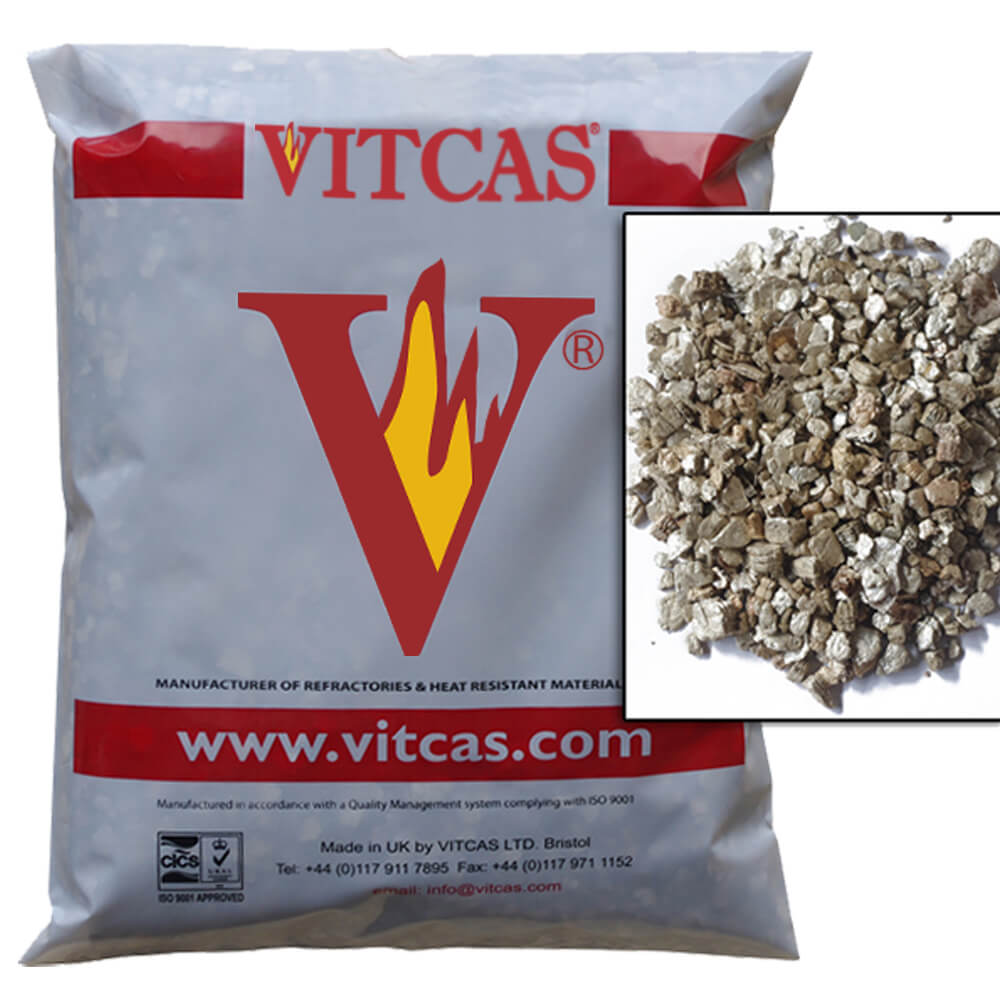
Vermiculite at the base of the oven can occur as loose fill or a rigid board. These formats do not create the same solution and do not have the identical method of support. In a bread oven, start with a section showing what supports the chamber and where the insulation is located.
Loose fill requires a closed space
Vitcas Vermiculite Loose Fill is a lightweight granulate for suitable insulation cavities. It does not independently create a rigid support for the entire oven. Mark the bottom, sides, and top closure of the space, as well as all passages.
Check if the material will remain in the intended place during installation and use. The path to the food chamber should not be accidentally opened. Do not tamp the fill according to your own idea to assign it load-bearing capacity that is not confirmed for the system.
The rigid format also needs assessment
Vermiculite board has its own indoor or sheltered applications. Its rigidity does not automatically describe the permissible load with a heavy chamber. Support and weather conditions need to be confirmed for the specific location.
Ceramic fibre board is a different material for the corresponding insulation assemblies, including properly supported oven bases. Compare the function, geometry, and pressure requirements instead of choosing solely based on format or maximum temperature.
The finishing of the base affects the whole
In the cross-section, describe the chamber support and the water path at the inlet. The insulation under the oven should be maintained and secured according to the solution. A wet base does not become ready for intense heating just because the bottom surface looks dry.
Record the exact product and the thickness of the applied layer. Take a photo before setting the chamber or closing the void. In the case of later repair, this will allow distinguishing a change in support from an insulation problem without guessing which material was used beneath the baking surface.