In a small kitchen, an additional layer on the wall takes up space, so its thickness must be considered before placing the cooker. First, check the device manufacturer’s requirements for clearances and adjacent materials. The heat-resistant cladding alone does not automatically allow the cooker to be moved closer to the wall.
Determine what is under the finishing
A masonry wall, a panel on a frame, and a wooden structure impose different requirements. Record all existing layers, including paint, adhesive, and covering. A material with good heat resistance may be an unsuitable choice if it is to be adhered to a weak or incompatible surface.
Also assess adjacent furniture and elements above the cooker. The wall protection plan should consider the entire appliance layout, ventilation, and cleaning access, not just the section visible behind the burners.
The panel and plaster have their own roles.
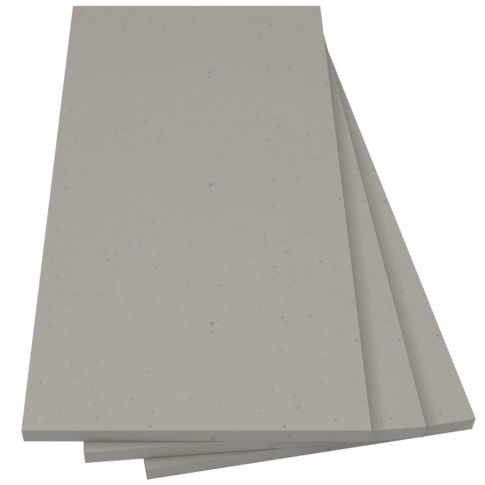
Vitcas HT is an example of a high-temperature panel for specific applications. Its use must be adjusted to the substrate, mounting, and conditions at the cooker. Do not treat the panel as independent confirmation of the wall's fire resistance.
When planning the finishing, you can check plaster Vitcas HRP on substrates approved by the manufacturer. The final layer, adhesive, and primer must also be suitable for heating and the intended use of the surface.
Draw the detail before starting work.
Mark the thickness of the new layers, the edges of the cladding, and the connection points. Check whether, after completing the cover, it will still be possible to position and service the cooker according to the instructions. Do not enclose pipes and gas connections in a way that hinders the required inspection.
If the wall darkens, the coating peels off, or the adjacent furniture becomes noticeably hot, start by checking the positioning of the device and the source of the problem. The new layer should be part of a compliant solution; merely covering up signs of overheating does not explain why it occurred.